Perspektif15th Oct 2026
Search is Getting Bigger. So Is The Role of Search

Article's author
Share article
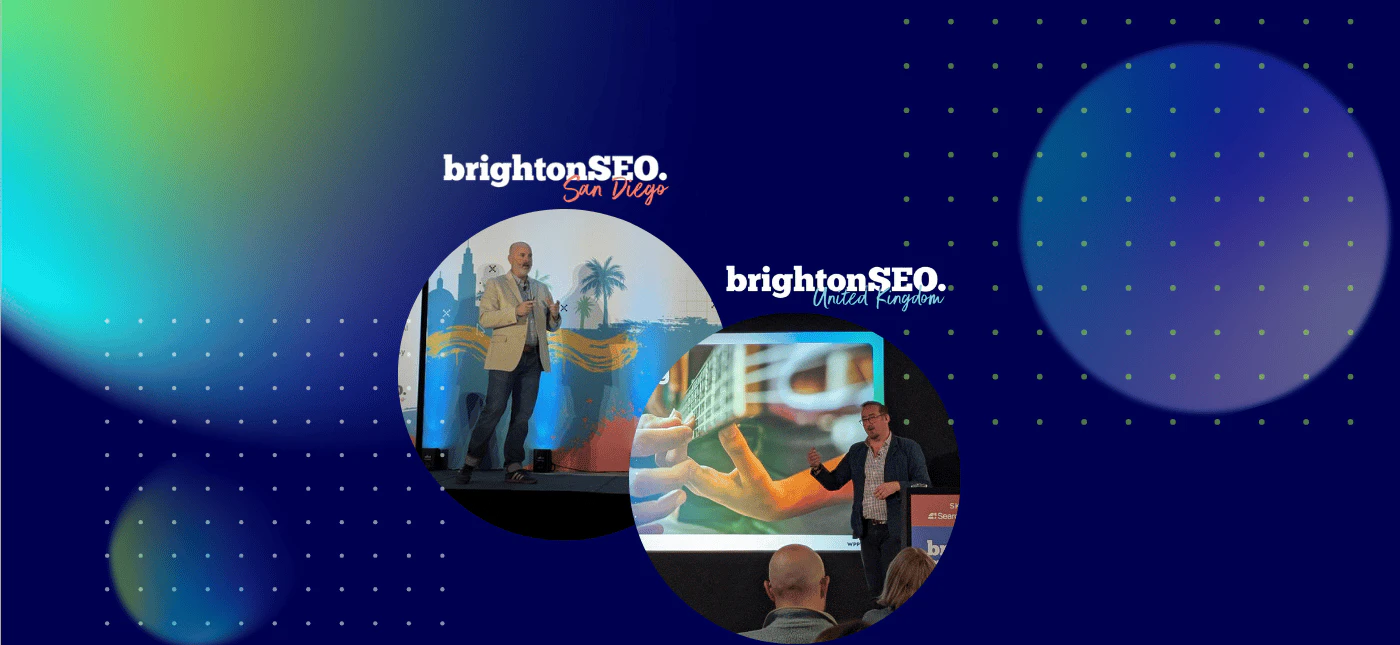
Editor’s note: WPP Media search leaders Edward "Teddie" Cowell, Global Head of SEO and GSO at WPP Media, and Chris Schweppe, Group Director of Organic Search at WPP Media, recently spoke at BrightonSEO events in the UK and San Diego about how AI-powered discovery is changing search. While their sessions approached the topic from different angles, they pointed to a similar conclusion: search is becoming broader, more connected and increasingly important across marketing.
Search is Entering a New Era
For years, search teams have had a unique window into what people want.
Search data reveals the questions people are asking, topics gaining momentum and information they need before making a decision. Yet much of that intelligence has historically remained within the search function.
That is becoming harder to justify.
Consumer journeys increasingly move between traditional search, social platforms, commerce environments and AI. They are also becoming more conversational and multimodal, spanning text, voice, images and video.
At BrightonSEO UK, Edward "Teddie" Cowell explored this changing landscape through the idea of Total Search, looking beyond individual channels to consider the intent connecting them.
At BrightonSEO San Diego, Chris Schweppe considered the same shift from another perspective: what does a broader search landscape mean for the people working in it?
Together, these perspectives raise an important question for search teams: if search is becoming more connected, should the role of search practitioner become more connected too?
Search Is Bigger Than a Search Engine
People do not necessarily think about where they are searching. They are simply trying to find something.
A discovery journey can move between a traditional search engine, social content, an AI-generated answer and a commerce platform.
The result is a search environment that is increasingly difficult to understand through any one channel in isolation. WPP Media’s internal Total Search framework accounts for traditional, AI, social and commerce search, with audience intent connecting them.

This does not make keywords, rankings or websites irrelevant. It simply means they are part of a larger picture.
The question is shifting from “Where did someone search?” to "What were they trying to find?”
The Role of Search Is Expanding Too
A broader discovery landscape naturally asks more of search professionals.
The fundamentals still matter. Understanding intent. Creating relevant content. Establishing authority. Making information easy to discover.
But those skills can now inform decisions well beyond traditional search results.
Search insights can reveal which questions people are asking, which sources influence answers, and where information gaps exist. That intelligence can be useful to content, PR, social, media, and other teams trying to understand how audiences discover a brand.
The opportunity is not for search practitioners to take ownership of those disciplines. It is through a shared set of data, insights and measurement to connect the channels together.
Surfacing topical citation gaps focuses the efforts of the owned content team.
Identifying the online publications that are influential to LLMs fuels the PR team.
Highlighting the subreddits, YouTube channels and other social and user generated content sources that are cited frequently in your universe is grist for the social team.
And, finally, identifying the areas where your brand lacks credibility and relevance helps target media spend.
In this scenario, you become the coordinator of the combined effort. You identify the areas of need and supply the insights that allow the relevant channels to go to work effectively.

Three Shifts Worth Making
1. Look Beyond the Platform
Search behavior increasingly spans traditional engines, AI, social platforms and commerce environments.
Instead of looking at each interaction separately, start with the need connecting them.
What is someone trying to understand?
What information are they seeking?
Where are they turning for answers?
That creates a more useful view of the discovery journey than treating every platform as a separate experience.
2. Connect Metrics to Meaning
Search teams have no shortage of metrics.
The harder question is what those metrics actually tell the rest of the business.
Visibility, citations, and recommendations become more useful when they help explain whether people can find accurate, relevant information about a brand.
This is particularly important in AI environments, where consumers can receive an answer without necessarily visiting the brand’s website. The goal is not another dashboard.
It is a clearer understanding of how brands are being discovered and represented.
3. Share Search Intelligence
Content, PR, social, media and search may operate as individual disciplines, but audiences do not experience them that way.
Information encountered in one place can influence what appears somewhere else.
That makes search intelligence more useful when it travels.
If search teams discover an emerging question, a recurring content gap or an influential external source, that insight may be just as relevant to another team as it is to SEO.
Search as a Connector
This was one of the most interesting ideas we talked about and saw echoed at both BrightonSEO San Diego and United Kingdom.
Search teams sit close to audience questions and discovery behavior. That gives them an opportunity to provide useful intelligence across the marketing organization.
Not by trying to control every touchpoint, but by helping teams understand how those touchpoints connect.

What This Can Look Like
One example shared by Chris Schweppe involved Arizona State University.
An LLM visibility audit showed that some questions about the university were being shaped by sources outside its owned channels, including community and video content.
Rather than looking at the issue through search alone, different teams could use the same insight to inform content, community engagement and video.
The important point is not any one channel.
It is that understanding the discovery ecosystem that gave different teams a common problem to address.

That is a useful model for thinking about AI visibility more broadly: understand the question, understand the sources shaping the answer, then decide where action can make a difference.
Start With the Audience
Through the advent of AI discovery, search is evolving from being perceived as a performance channel at the end of a marketing plan, into an important brand channel and source of insight to inform the plan. However, brand marketers tend to think in terms of customer audiences.
It is tempting to respond to every shift in search by focusing on the newest platform, tool or acronym.
But the more useful starting point may be much simpler.
Start with the audience.
What are people trying to understand?
Where are they looking for answers?
Which sources are shaping what they find?
Where is your brand helping, and where is useful information absent?
Then share those insights beyond the search team.
Search will continue to change. The platforms will change. The terminology probably will too. But helping people find useful, relevant information remains at the heart of the discipline.
What is changing is how many places that work can now take you.