
Etkinlikler1st Jul 2026
Intelligence shapes what's next: highlights from the NextM '26 edition

Article's author
Share article
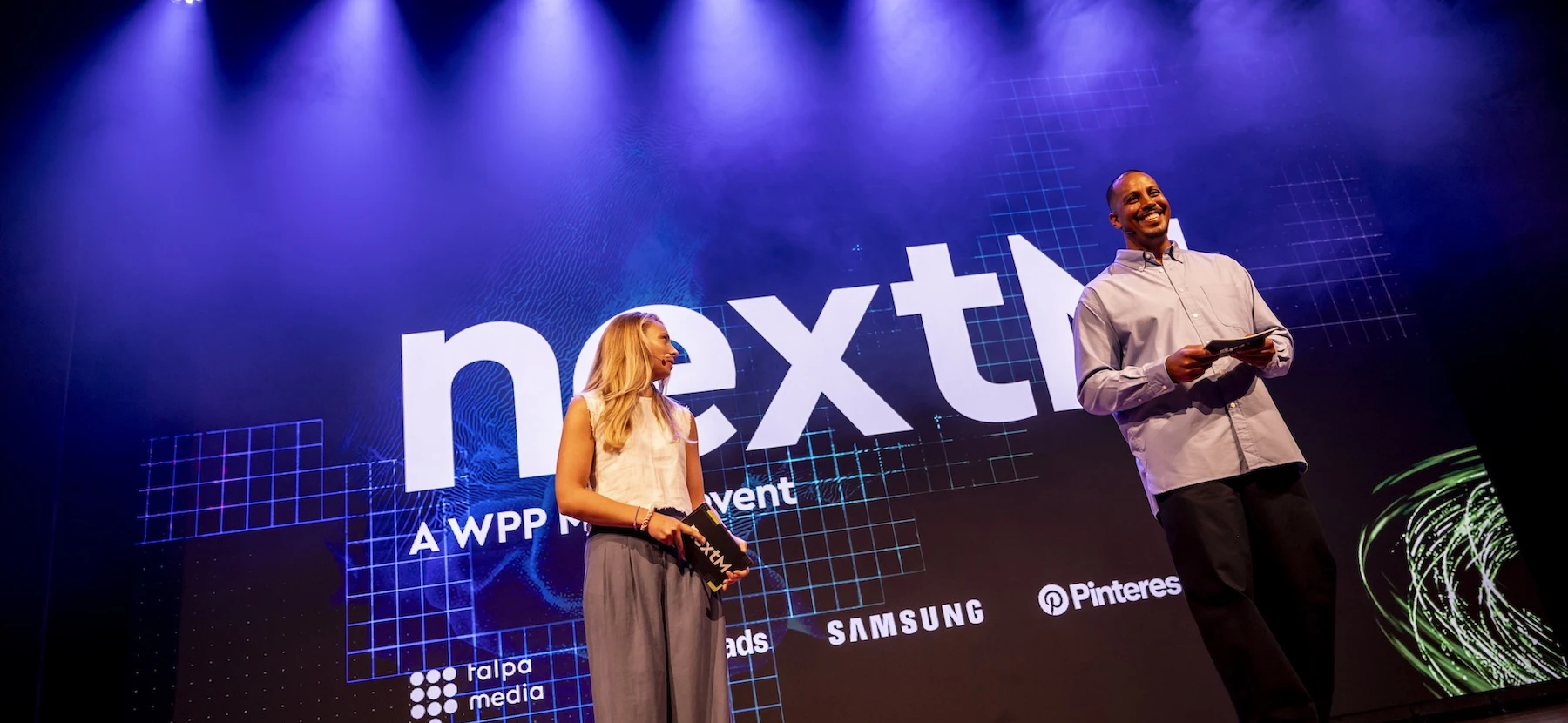
Tuesday 30th of June, the 10th edition of NextM took place at the Evoluon in Eindhoven, the annual event by WPP Media where we look ahead together to the future of media, marketing, and technology. With the theme "Smart, Smarter, Smartest - The intelligence edition", one central question stood out: how do we use intelligence to make better decisions for people, organizations, and society? From the human to society, from the workplace to life in the city: across these four perspectives, we explored how intelligence is becoming increasingly intertwined with the world around us.
SMART ME
At its core, intelligence starts with the human. We spoke with Govert Viergever, former Olympic rower and biohacking expert. He took us through how science and self-knowledge come together in optimizing human performance, where biohacking goes far beyond the insights we get from a smartwatch. By connecting biological data such as DNA profiles, blood values, and hormone measurements with AI, we can uncover correlations that were previously difficult to detect. This leads to insights that help us better align with what our body and daily routines truly need.
“By getting to know your body inside and out, you can manage your nutrition, recovery, sleep and mindset in a way that truly works for you.” – Govert Viergever, former Olympic rower and biohacking expert

SMART SOCIETY
The impact of intelligence extends beyond the individual and also shapes the way we collaborate, tell stories, and create. If intelligence does not only process but also creates independently, what does that mean for our culture and ideas around creativity?

Eline van der Velden, filmmaker, physicist, and CEO of Particle6, took us into a creative industry in transition and showed how technology is redefining traditional creative roles. Her self-developed AI actress Tilly Norwood provided a concrete example of how we are rethinking authorship, ownership, and human creativity.
SMART WORK
What does the future of intelligence look like in the workplace? During the WPP Media Keynote, delivered by Fabian van den Berg and Jasper Kuipers, a live demonstration showed the marketer in 2031 working within a single central intelligence system: WPP Intelligent Insights. The shift from separate tools to continuously learning systems means decisions are made based on real-time knowledge within one integrated environment. The message from the speakers was clear: technology is evolving rapidly, but ultimately it is up to people to give direction to how that evolution takes shape.

“AI can be seen as Lego bricks; it’s about what you build with it.” – Fabian van den Berg, Product and AI Strategy Manager
SMART CITY
After exploring intelligence from the human, work, and society perspectives, we turned to the place where all these worlds come together: the city.

Iskander Tange, with his company Coding the Curbs, maps the transformation of our physical environment. By digitizing something as ordinary as the curb, cities gain the ability to think ahead. This form of urban intelligence marks a shift from static design towards cities that can better respond to changing needs and mobility patterns.
Futurologist Teemu Arina followed with his “less is more” approach. By using AI to reduce complexity, we can focus on what truly adds value. In his view, the role of humans increasingly shifts from executor to creator, while quality, taste, and ethics remain human responsibility.
“You don't want to have more, more, more; you want to intelligently decide what to hack away so that you can unravel the beautiful statue inside the rock.” – Teemu Arina, futurist

Where Govert Viergever showed how biological data can contribute to personal performance, Teemu Arina expanded the concept of biohacking to the relationship between humans and their environment. In his vision, our environment becomes increasingly responsive and better aligned with our biological rhythms through smart tools, allowing technology via our surroundings to contribute to both physical and mental wellbeing.
At the end of Teemu’s keynote, he brought his vision into practice with a live demonstration, where AI turned the day’s sessions into transcripts, summaries, fact checks, and social content within minutes. In doing so, he showed how technology can take over repetitive tasks, allowing people to focus on creativity and strategic thinking.
Data and intelligence play an increasingly central role in everything we do. In a world where technology and change evolve at high speed, we are at the beginning of a new phase that requires fundamentally different thinking and the conscious design of our routines and environments to work and live more intelligently. Technology does not simply replace existing processes, but creates space to rethink how we create and which human values we want to preserve in the process. At the same time, these developments make it clear that trust, transparency, and careful handling of personal data are more important than ever. We have lived in a world full of data for years. But intelligence only begins when we give that data meaning and translate it into new possibilities.
Intelligence shapes what's next
