Research26th Nov 2025•4 minute read
The Shaping of “Shaping the Nation”

Article's author
Share article
Advertising is about empathy. It’s about understanding the people you want to reach and then serving them with ads that feel familiar, relevant and close-to-home. We can understand a lot about the country, its attitudes, and its likes and dislikes through quantitative data, but getting the full story requires a human touch.
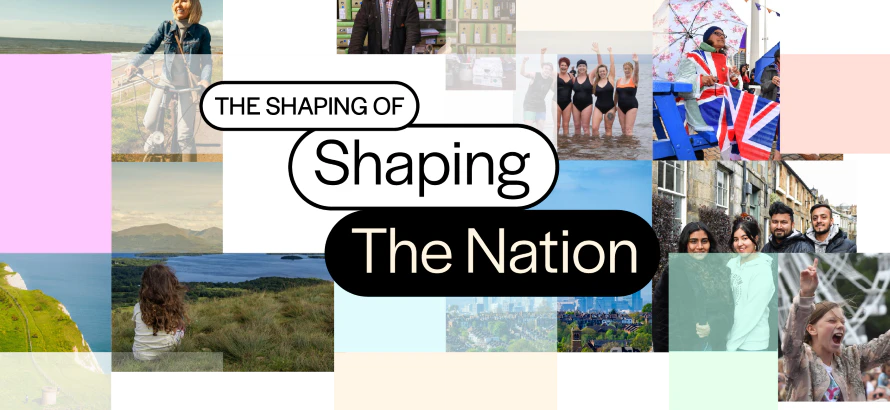
However, 1 in 3 people today feel their local area is not represented at all in marketing. This was just one of the takeaways of WPP Media and Mindshare’s inaugural Shaping the Nation report. This new research was conducted in partnership with Reach, Blis, Mobsta, Captify, JC Decaux, 5 and Sky to understand the unique character of Britons across the different parts of the UK.
So, when we set out to create Shaping the Nation, we wanted to give a greater snapshot of the people of the UK, beyond the 10,000 people surveyed digitally - a study that would spotlight the real people behind the data. To enrich a doorstep or digital survey; you can learn even more about a person over a cup of tea and a biscuit…
The Task: Meeting the locals
The groundwork for our report was laid by a large-scale quantitative survey. But the real golden nuggets came from our trips up and down this culturally rich and diverse country, where we went into the homes of real Brits to uncover the truth about their lives. With a hefty load of data to analyse, getting some direction from the people of Britain was the best way to start.
To uncover a true picture of this country and its inhabitants, our nationwide tour began, inviting dozens of individuals - young and old, northern and southern, religious and non-religious, locals and newcomers - all to share their thoughts with researchers in the places that matter most to them.
Deciding where to go was step one. To give us the most representative snapshot, we wanted to make sure that all regions of Britain were visited, from the windswept coasts to the flatlands of the East, and that all types of settlement were surveyed, from the smallest villages to the largest cities. The next step? Actually visiting the participants themselves.
The faces behind the Nation
What’s most surprising about meeting people in their own space is how open they are. In some situations, having a microphone set up in front of you can be daunting. But we wanted to put people at ease as much as possible.
Take, for example, Caroline in Berkshire. As a new resident of this sleepy part of the Home Counties, she found the transition to rural life more difficult than expected. Part of the reason we reached out was to discuss a community WhatsApp group she had set up to help tackle loneliness in the area. What started out as a shy catch-up in Caroline’s front room ended up with us strapping on the wellies and heading down to the local pub for a raucous group meetup.
Once there, we got to meet members of the community group and hear first-hand what people felt about the village they lived in, the support network they had built and the people they call neighbours. This conversation illuminated the very meaning behind our research; here was a salt-of-the-Earth depiction of how real people connect today, via social media and in person. Advertising that navigates these nuances - and appeals to those pubgoers, for instance - is a sure-fire avenue to audience engagement.
Another invaluable meeting was when we visited Faith at her care home in Watford. As a young woman, she had moved to the UK as part of the Windrush Generation and made London her home. Now in her mid-80s, she still carries that zest for life that inspired her to travel all those years ago. Going into a care home, you might expect a quiet and reserved environment - but beyond the stereotypes, we were able to put a human face to the report and uncover some fascinating observations about our elderly population.
Revealing the secrets of the data
With a treasure trove of data available about the opinions of the UK, it can be easy to miss important insights without a guide. Well, our guide was the people we managed to meet.
When travelling the country, one particular theme came up again and again. While those in cities and villages displayed optimism, whether about themselves or the country at large, people in towns did not.
From conversations with town inhabitants, and from travelling across dozens of copy-and-paste high streets with a distinct loss of character, it was clear that something was off. So when we dug into the data to check, our hypothesis was validated by real-world experience.
According to the report, residents of towns report the lowest rates of positivity about their local area when compared to all other groups. This was a key takeaway that would have gone unnoticed if it weren’t for our trips and the faces behind Shaping the Nation. Now? It can inform positivity-driven local campaigns that help brands dig into new markets - and residents feel prouder of their communities.
Putting a face and name to the numbers
We live in a world of data; from clicks, to interactions, to likes and shares. But the added layer of a real-life conversation is invaluable. Whether it was the caravan park in Devon, the family business in Southwold or the ever changing dynamic of a high street in Manchester, Shaping the Nation relied on reaching beyond people’s screens and into their homes.
Humans act differently online and offline. People are not digital monoliths. So sometimes, a cuppa and a chat is the only way to understand a person fully.
You can read the full Shaping The Nation report here.
The qualitative research for the Shaping The Nation report was conducted by THE PEOPLE and Meet the 85% on behalf of WPP Media. These stories are taken directly from their own experiences.