

Conversation 2: The Algorithm
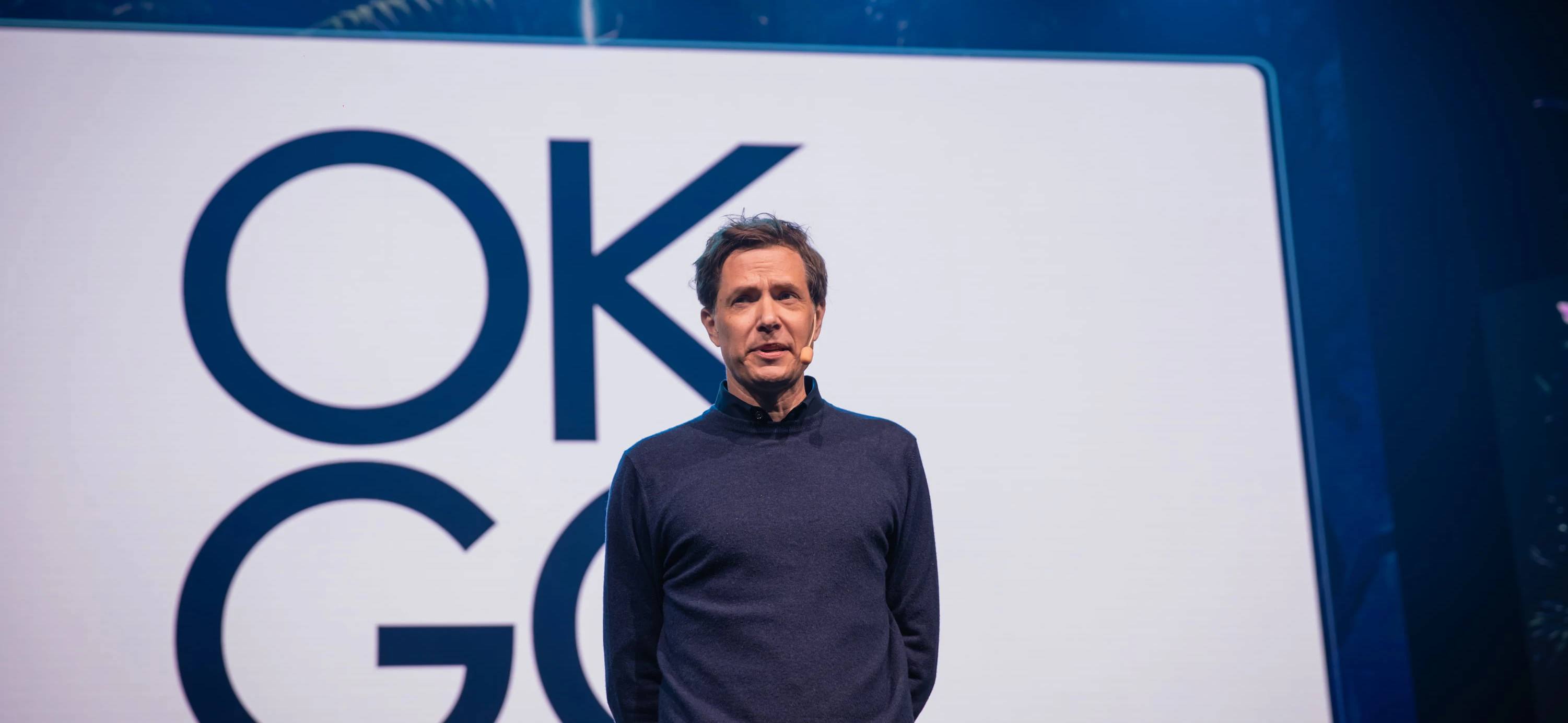
Iconic US band OK Go have been here for twenty-plus years. Twenty years of elaborate, human-powered, single-take music videos shot with real physics and real risk. Twenty years of ignoring whatever the algorithm currently wanted. And twenty years later, singer Damian Kulash is still making work that cuts through - while most of the "content creators" who chased the metrics around them have disappeared.
If anyone has lived through the entire arc of algorithmic media - from the first viral YouTube wave in 2007 to today's TikTok-tuned, AI-accelerated attention economy - it's him. So, following his NextM Nordics keynote presentation, we asked the question most marketers should be asking themselves: what exactly are we competing on when the algorithm rewards speed, and AI can now produce infinite content to feed it?
The three reasons to make anything. Damian broke it down with simple honesty. There are three reasons anyone makes anything:
To maximise profit. (AI is great for this - at least short-term.)
To have a job. (AI is terrible for this - it will make your job harder or take it.)
Because you genuinely need to make something. (AI doesn't really help at all.)
The best work lives in the third camp. And it's the hardest to protect inside an industry increasingly optimised for the first two - and inside an algorithmic economy that rewards volume over vision.
The Young Lean moment. We showed Damian the Generation 8 Storm dance piece currently going viral around Young Lean. His live reaction: "The best compliment I can give this is that I'm so jealous of it." Then he broke down why it works. It could have been done with AI. But it wasn't. And you can feel that. The human effort is the point. His line that will stay with us: "When anything is possible, nothing is special." Production values used to signal quality. Now anyone can make something that looks polished. So the signal of quality has shifted to something harder to fake - genuine human intent, effort, risk, and the happy accidents that come with all three. In a feed full of AI-generated noise, visible human effort is the new premium.
The OK Go decision. Somewhere around ten to fifteen years ago, Damian realised the band had a choice. Either keep making objects they obsessed over and loved - or become a stream, feeding the machine weekly. He chose the former. His words: "I'd have been miserable chasing metrics. And I'd have been bad at it." That decision is why OK Go are still here. YouTube's algorithm has changed a thousand times since their treadmill video. OK Go's work hasn't needed to. "If you chase the trend, you leave with it." Contrast that with the MrBeast model - data-driven, high-volume, algorithmically tuned. Damian is explicit: no judgement, it's a legitimate business, it's just not art. And artists and brands confuse those two at their peril.
The strategic principle. Are you building for the algorithm - or building something the algorithm is forced to carry? Because trend-chasing is a tax that compounds. Every brand and every creator now has access to the same AI acceleration. Same models. Same speed. Same capacity to flood feeds. The thing that can't be commoditised is the specific creative conviction of the specific humans you've hired - and the willingness to follow it when the dashboard disagrees.
Three questions every leader should be asking:
Do your people know why they got into this? Nobody joined advertising because they wanted to sell products. They joined because a film, a song, a campaign moved them and they were crazy enough to think they could do that for other people. If your culture has buried that under attention metrics, you've buried your differentiation with it.
Are your incentives pulling people toward the algorithm or toward the idea? Performance systems will always reward feeding the machine. But as Damian puts it: if you chase the trend, you leave with it. The brands that last are the ones making decisions the algorithm couldn't have told them to make.
Are you protecting visible human effort? In a world where AI can make anything look polished for free, the new quality signal is effort you can feel. Single takes. Real physics. Real risk. Real people. If everything in your pipeline has been smoothed into AI-grade competence, you've removed the thing audiences are now scanning for.
