Insights10th Feb 2026•5 minute read
Insights from Eurobest Awards 2025 judging room - the changing face of B2B campaigns

Article's author
Share article
The face of B2B marketing is changing - and it’s changing quickly. Last year I was honoured to be selected as Jury President of the Eurobest Creative B2B award category. I was given the opportunity to get up close and personal with different brands working in the B2B space. Here’s what I learned, and what I felt was missing, from B2B’s top campaigns.
Breadth and depth
B2B is one of the most varied and diverse categories of marketing. Its complexity is what makes it one of the most interesting areas to work in. Reaching across so many sectors and verticals, with different audiences from traditional B2B, to B2G and even B2B2C, is what makes every day a school day for me. But let’s start with an overview of the current playing field.
On one end of the spectrum sit what I call the “traditional monarchs” of B2B: industrial manufacturers, construction machinery, specialist technologies - the likes of Nokia, EcoLab, Cytiva. Brands that exist almost entirely out of public view. They are three steps removed from consumer culture, invisible by default, and historically cautious in how they communicate.
On the other end are everyday “known” brands whose B2B products touch daily life. In areas like automotive, food and beverage, telcos - the MasterCards, Fords, BTs and Googles of the world. These brands enjoy a kind of functional proximity to consumer culture, which makes it easier for them to tap into recognisable moments, emotions, and cultural codes.
What surprised me most from the judging panel was how the traditional monarchs didn’t just show up - in several cases, they outperformed the everyday brands.
When these businesses embraced creativity, they unlocked something powerful: deeply human, tangible stories rooted in real-world problems and expertise. Creativity, at least to the average consumer, is not something they’d associate with the world of B2B, but that’s a false perception. Given B2B’s underlying presence in our everyday lives its creativity deserves more recognition and that’s part of the reason I agreed to help judge these awards.
Visibility requires purpose and collaboration
Another defining theme within the award entries was how brands harnessed collaboration with real sincerity.
We saw businesses partner with NGOs to turn engineering capability into humanitarian outcomes. Brands working together to make invisible products culturally meaningful. Cross-industry alliances where technical expertise was paired with human storytelling to bring ideas to life.
But the collaboration also works in both directions.
Partnerships helped traditional B2B brands become visible to the average person - giving behind-the-scenes businesses more real-world relevance. In a world where awareness is everything, these symbiotic relationships are becoming even more important for B2B-native brands.
Recognising reality
Many of the strongest campaigns were deeply grounded in the global realities of 2025, as businesses grappled with the reality of a rapidly changing world.
The work I judged demonstrated a real proximity to the problems we all face - supply chain fragility, climate pressure, humanitarian crises, shifting labour dynamics. Take for example Bronze Eurobest winner Heineken and LePub’s Pub Succession campaign. This campaign aimed to find a new pub owner for the McLoughlin’s family pub in Ireland, which had been in the family for 155 years. Reaching across the Irish diaspora to find a new McLoughlin, the campaign reached 88m Irish people worldwide in search of a descendant to take up the mantle, reflecting the changing dynamics of rural businesses and workforce insecurity. Businesses that engage honestly with the challenges of the world will always win points for authenticity with their audiences.
The best work felt less like “marketing reacting to culture” and more like businesses actively participating in it and even leading the way. In other words? Engage with people on a human level. People’s personal passions often bleed into their professional lives, and recognising that reaching businesses is ultimately about reaching the people in those businesses is the best way to win hearts and minds.
The missing pieces
Equally telling was what didn’t appear.
There were no entries in the Long-term Brand Building, Effectiveness and Measurement, or Influencer Marketing categories. Yet these areas are critical for sustaining brand health in B2B - and ripe for bold creativity.
To me, the absences reflect the realities many businesses faced in 2025. CMOs operating under increased scrutiny from risk-averse CEOs and CFOs. Marketing roles expanding beyond communications into commercial accountability. Short-term targets, budget protection, and immediate metrics taking priority over long-term impact.
The omissions are understandable, but in an industry that’s becoming increasingly “who dares wins”, something’s got to change.
Similarly, while emotion remains central to B2B storytelling, humour was noticeably scarce compared to the past two years. Humour is increasingly seen as “unsafe” - harder to justify, harder to measure, easier to criticise. And yet, when used strategically, it remains one of the most effective ways to build memorability, trust, and distinctiveness. Recent years have proven that.
Avoiding it entirely feels less like risk management and more like creative retreat.
2026: B2B’s year to be bold and brave
For me, all of this insight points to a clear opportunity for forward-thinking B2B marketers..
Across 2026 and beyond, the winning brands will be those who:
Remain open, bold, and real, even in complex or restrained business environments.
Build connected ecosystems, work with industry partners, and look beyond company walls.
Collaborate in new spaces with non-traditional partners who bring different perspectives and credibility.
B2B doesn’t need to borrow confidence from B2C any more. The judging room made that abundantly clear. The category already has the depth, the stories, and the impact. What it needs now is the courage to lean fully into them.
And to take a few more risks along the way.
Further Awards Insights in 2026
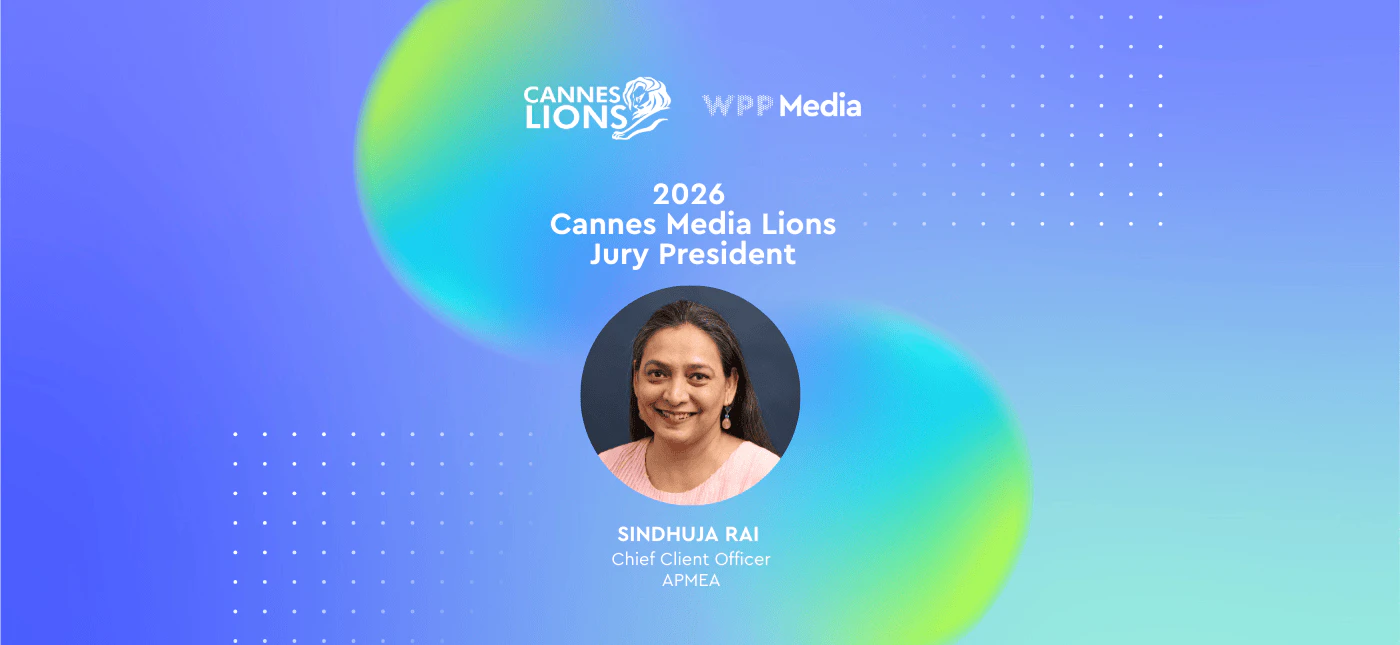
2026 Cannes Lions Festival of Creativity named Sindhuja Rai, WPP Media’s Chief Client Officer for APMEA (Asia Pacific, Middle East and Africa), as President of this year’s Media Lions jury.
Following the Festival of Creativity, Sindhuja will share her insights from the Media Lions jury room, leveraging her considerable experience and expertise, as well as WPP Media’s unique talent, influence, and leadership role in the global media landscape.
WPP Media’s leadership role at Cannes 2026 builds on our standout performance at the 2025 festival during which our clients were awarded 77 Lions, including 9 Grand Prix and Titanium trophies, making WPP Media the festival’s most awarded media company.