The Brief23rd Apr 2026
Smarter Search, Deeper Connection: What the Future of Search Really Means for Brands

Article's author
Share article
The Brief is WPP Media's series, distilling insights from our Client Learning Program to give marketers the intelligence they need for intelligent growth—all in brief.
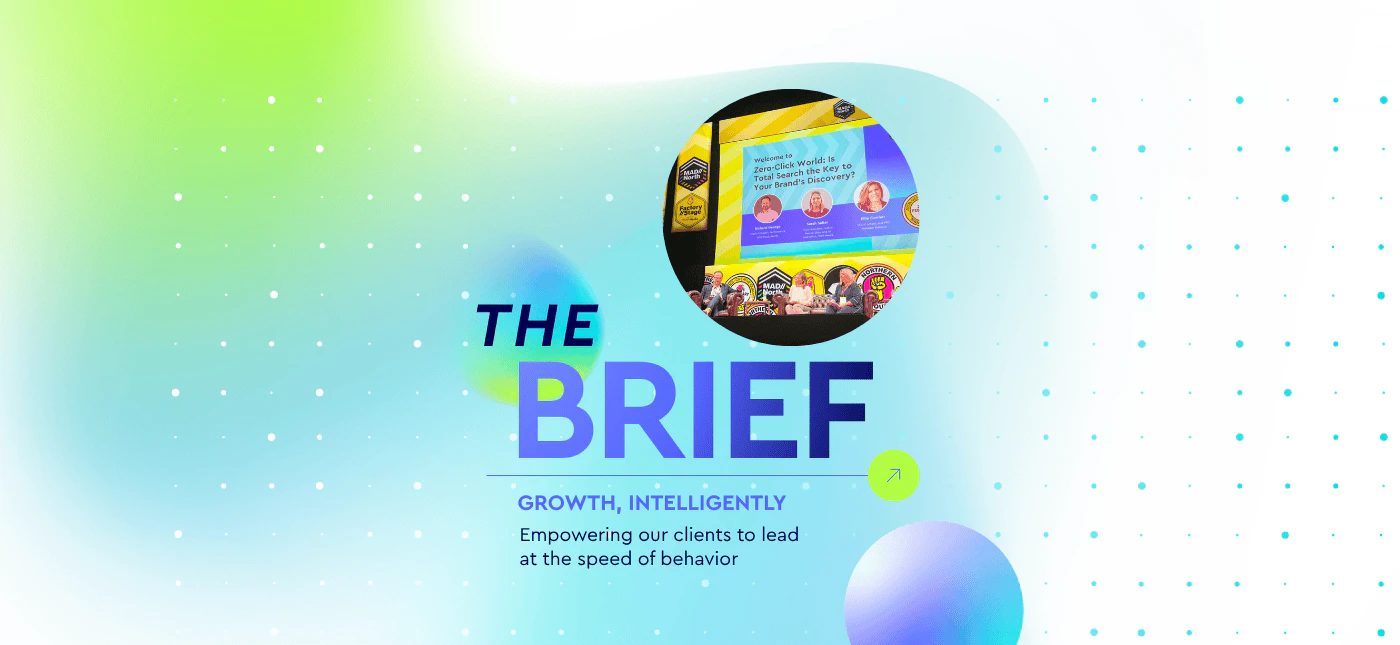
It’s the question on every marketer’s mind, and at the recent DHC x Google Summit, leaders from Google, Genentech, and CMI Media Group tackled it head-on: in a world of generative AI and rapidly changing user behavior, is paid search still effective? And is the brand website still relevant?
The short answer, delivered with confidence by the panel, is a resounding "yes and yes." The reality is, search isn't dying; it's entering a period of massive growth and evolution. Last year alone saw a 9% year-over-year growth in health-related search opportunities and a 15% growth for pharma brand websites.
This isn't a moment of decline. It's a moment of change, and for marketers ready to adapt, it's a moment of incredible opportunity.
Users Have Changed How They Search
Forget simple keywords. Today, users search with natural, specific, and complex questions. More than half of all health searches in the US are now long queries of more than five words. Rodrigo Kuna, Head of Search, Healthcare at Google, illustrates this shift perfectly.
"Instead of searching 'cancer treatments,' you're probably right now searching something much more natural, like 'what are actually the treatment options for cancer, for example, for someone above 65 years old?'" – Rodrigo Kuna, Head of Search, Healthcare, Google

This shift means brands can no longer just bid on a handful of keywords. To stay relevant, you must understand and meet the intent behind thousands of potential variations, a task that is simply impossible at a human scale.
AI: Your Engine for Understanding Intent
This is where AI becomes essential. It’s the engine that allows brands to capture the nuance of natural language queries. Tools like AI Max are designed to understand your keywords, website, and creatives, and then match them to the new ways people are searching. This captures entire themes of intent rather than just specific phrases.

As Marc Minassian, Head of Media and Innovation at Genentech, notes, AI also helps us move beyond targeting explicit conditions to predicting behaviors. This removes our own biases about who might be interested in certain health information. For example, a partner or family member may be researching a condition like breast cancer, even if they aren't the patient. AI can identify these valuable audiences in a privacy-safe way, using technologies like data clean rooms and tokenization to ensure sensitive data never changes hands.
A Breakthrough for HCP Targeting
One of the most exciting developments is Google's expansion of "Customer Match" for pharmaceutical marketing. For the first time, brands can use their first-party data, such as email lists of healthcare professionals (HCPs), to target them directly on platforms like Search and YouTube.
This allows for highly specific and relevant marketing to doctors during their "blue jeans moments" when they are not at work but are still consuming content. It’s a powerful way to connect and a huge step forward for the industry.

Your Website Is Now More Important Than Ever
With AI summarizing search results, it might be tempting to think the brand website is becoming obsolete. The opposite is true. Your site is the source material for AI, providing the content that trains these models.

"All the content...they actually influence the way to influence AI tools. That's another very big reason why your website matters, because actually that's the way for you to influence on how you're going to show up." – Rodrigo Kuna, Head of Search, Healthcare, Google
This is where Generative Engine Optimization (GEO/GSO) comes into play. As AI-powered summaries and answers become a front door to discovery, the structure, clarity, and authority of your website content increasingly determine whether—and how—your brand is cited, summarized, or recommended.
Furthermore, data shows a very high percentage of people who engage with an AI summary still click through to the cited websites. Your site remains the ultimate destination for users who want to go deeper.
The Takeaway: Focus on Outcomes, Not Just Keywords
The evolution of search requires a new mindset. The goal is no longer just to "own a keyword." The focus must shift to the results those keywords drive.
"It should really be about the outcome that's coming from those keywords." – Courtney Mullen, Senior Vice President, SEM, CMI Media Group
Success in this new era means aligning with partners to define what good looks like, focusing on measurable actions, and leveraging AI to meet your audience at their point of intent —including emerging GEO/GSO tactics that help brands surface within AI-powered answers and discovery experiences. The world of search is getting smarter, more intuitive, and more effective. For brands that embrace this intelligent growth, the opportunities are just getting started.