Culture12th Oct 2026•3 minute read
The Power of Community: WPP Media at Variety Summit

Article's author
Share article
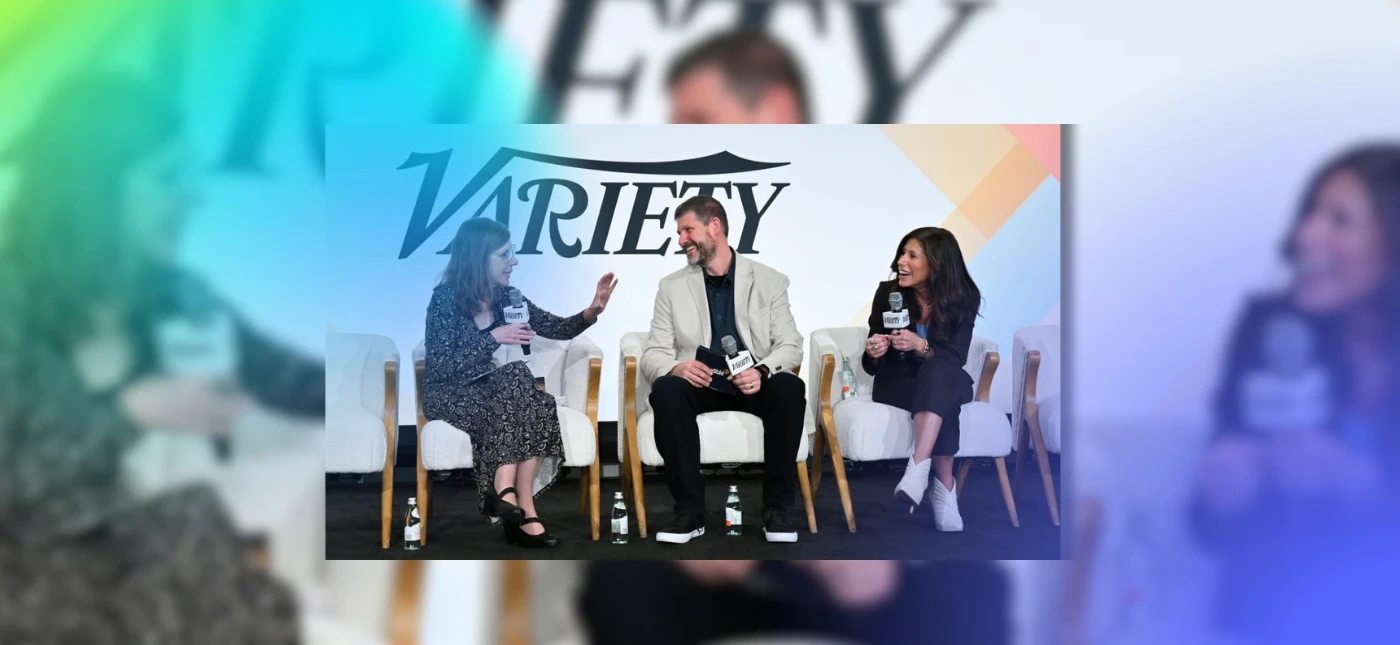
(Pictured above: Variety’s Cynthia Littleton chats with Audible’s Tom McKenna and WPP Media’s Nancy Hall at Variety’s 2026 Entertainment & Technology Summit)
Three Takeaways:
Media is a creative canvas, not just a placement. The brands breaking through aren’t buying more placements. They’re taking risks with where and how they show up.
The unique fan. It’s time to rewrite the RFP. A generational label is only one lens on a fan, and many other factors shape who they are and how deeply they engage.
Extending IP into real-world community. The strongest fan relationships aren’t being built through campaigns anymore. They’re being built by turning IP into games, retail, hospitality, and physical communal spaces.
Variety’s 2026 Entertainment & Technology Summit in Los Angeles packed a full day of studio chiefs, streamers, gaming leaders, and brand marketers into one room, moving through back-to-back panels on everything from AI to IP to the future of live experience. But one idea ran through nearly every conversation: Entertainment's real power is its ability to capture emotion and resonate with audiences, building some of pop culture’s cult-favorite fandoms. Within these worlds, there is a uniqueness to each individual that shapes how they invest their time, money, and identity. Which raises the question: How are brands today finding “unique” ways to tap into these audiences and meet fans where they’re at today?
Media Is a Creative Canvas, Not Just a Placement
Media shouldn’t be relegated to a place where the creative runs, but should be part of the story itself. The clearest articulation of that came from WPP Media’s own session, “When Stories Speak,” a conversation between U.S. CEO Nancy Hall and Audible’s Tom McKenna, SVP Global Head of Media, Operations & Business Development. Hall said the stories resonating most right now are the ones that invite participation, which is "what makes stories culture and not just content." Loyalty works the same way. It's no longer about "points and transactions" but about access: VIP events, drops, and one-of-a-kind experiences that turn customers into fans, and fans into a brand's best advocates. McKenna made it tangible with Audible's Story House pop-up, where a live podcast taping with the author and narrator of Dungeon Crawler Carl filled up in minutes, and fans traveled long distances, even from other states, to be in the room. For McKenna, the goal is work that feels authentic, "beyond just the spots and dots" brands typically run.
Hall's favorite execution from the partnership was "TikTok out of the phone," a Times Square activation that quite literally lifted TikTok content off the screen and onto the front of a massive building, making media part of the story. It was a risk, she said, and a courageous one. And that's the point: Any flat surface, from a stadium wall to a movie theater to a World Cup seat, is a creative canvas, and the brands willing to use it are the ones that break through "the sea of sameness." Hall's advice for the next generation of media talent doubled as a mandate: Be data and tech-savvy, culturally fluent, and creatively bold, because brands now have to make sure humans desire them and machines recommend them.
For a deeper dive into the conversation between Hall and McKenna, check out Cynthia Littleton’s Strictly Business podcast episode: The Future of Media Buying: Turning Buzz into Business With WPP Media’s Nancy Hall and Audible’s Tom McKenna
The Unique Fan
The fan described by a brief and the fan who actually shows up are rarely the same person. Spotify's Jenny Haggard was blunt about how briefs get written. "If I see another RFP from anyone in this room that says we're trying to reach Gen Z — Gen Z is ages 14 to 29," she said. The label hides more than it reveals, and age alone isn't much better. "Fan context trumps demographics," Haggard said. "A 25-year-old commuter in LA looks very different from a 25-year-old new parent in Indiana, and so there are things that a media plan can't reveal."
Other panelists made the same point about fandom depth. AMC’s Kim Granito said no two fandoms show up the same way or carry the same expectations. What they share is a desire to experience the story in their own way. Marketers should start with their core, she said, "but you can't build a wall so high that no one else can climb into it." She pointed to The Walking Dead, now 15 years old: Some fans tune in to every spinoff without ever posting about it, while others dress up as a character at Comic Con every year and bring their families. The passion is the same, Granito said, but it's expressed differently, so the job is to build as broad and layered a "choose your own adventure" path as possible.
SEGA's Ivo Gerscovich, who oversees the Sonic the Hedgehog brand at SEGA of America, described the same approach. Sonic's recent growth started with bringing back the core fans and then expanding out to casual audiences, and SEGA now runs what Gerscovich called a lore team, whose job is to create new characters, plant Easter eggs, and connect everything from games to TV to live experiences. The goal, he said, is that "if a young person comes in and is a very casual fan, they can have a great experience. Or if there's someone who wants a deeper cut, they can go really deep into the experience as well."
Extending IP into Real-World Community
The stories that hold fans longest are the ones they can walk into.
Reddit's Christina Kothari, on the “Titans of Innovation” panel, described a partnership with Sony Pictures for Resident Evil. Reddit invited fans from r/ResidentEvil, r/Horror and r/Movies to sneak previews in three cities, followed by a live AMA with the director. Creators are often invited to premieres, she said, and they matter because they bring reach. But this time they were paired with everyday Reddit members who have spent years building these communities, and that made the difference.
AMC brought the vampire Lestat to life as an immortal rock star for the third season of Interview with the Vampire, with songs launched on Spotify, a Rolling Stone cover whose issues resold on eBay for thousands of dollars, and a Beacon Theater event where the actor appeared in character before thousands of fans already singing along. In-person moments, Granito said, give people "a brief moment to believe and really experience this thing that they love so much."
Pinterest's Sara Pollack saw Gen Z searches for tarot, crystal meanings, and apothecaries sitting right next to Practical Magic 2 and built a pop-up with Warner Bros. where people could get readings, make custom candles, and blend their own tea. The payoff, she said, is that people keep making that tea at home: "It's an actual connection to the film — to Pinterest— that goes beyond just sort of an impression or a share or a like."
The same thinking is showing up in retail and hospitality. Nintendo's Devon Pritchard said that when the company opened its San Francisco store, "we were not building a box with merchandise. What we were creating was an experience for the player and fan," with a sense of community and connection built in. Paramount's Marie Marks applies that thinking to Nickelodeon hotels, where the experience has to work for kids and parents together. Each stay is built around the emotional thread of the IP, playful for SpongeBob and empowering for Paw Patrol. "I'm a lot about not just what it looks like, but how it breathes."
What ties all of it together is the pull toward being in the same room. Warner Bros. Discovery's Simon Robinson offered the reason community matters most even as brands are tempted to hyper-personalize everything with the help of AI. Fans come for their own moment, he said, but also "for the collective experience of being in a space of doing something together." Look at the Eras Tour: "10 million people didn't buy a ticket to see Taylor Swift to have their own experience." His caution for the industry: "As we think about how we use AI to personalize things and develop hyper-personalization within experiences, I think we need to be careful we don't break the power of the community."
What This Means for Brands
Every panel eventually landed on the same idea. Entertainment's job is to capture emotion, and once it does, it's the individual fan, not the platform or the format, who decides what that connection is worth in time, money, and identity. That means the brief has to change. Life stage and depth of engagement tell you far more about a fan than a generational label ever will, and the on-ramp has to work for every fan, regardless of engagement level. It also means being bolder about where a brand shows up. Media is a creative canvas, and the risk is worth taking when it turns the medium itself into part of the story. It means building for the room, not just the feed. The examples that resonated most all understood that fandom needs somewhere to gather, and that personalization has to be balanced with the feeling of community provided by collective moments.
AI runs through nearly all of it, not as the story but as the thing sharpening every other conversation, about what stays human and what a brand risks losing if it optimizes away the communal experience altogether. Lionsgate's Kathleen Grace put it well: "Do not underestimate humanity's ability to break and bend technology to its own will, especially when it's being used for creativity. Filmmakers, marketers, and fans alike will keep finding new ways to use it that no one on a stage in Beverly Hills predicted.” The brands and studios pulling ahead aren't the ones simply talking about fandom. They're the ones engineering for it, platform by platform, in real life and online.